
A great road trip can mean scenic stops, new trails, favourite snacks, and a little more time with the pets who make life better. Still, before you hit the road, it is worth remembering that dogs and cats experience travel differently than we do. Some pets happily hop in the car before you have even found your sunglasses. Others become anxious, nauseated, restless, or overwhelmed by the unfamiliar sounds and movement. A little planning can make a major difference when you travel with dogs or cats, helping keep every passenger safer and more comfortable from Kelowna to wherever the road leads.
Preparing Your Dog or Cat for a Car Trip
The best car trip with a dog or cat starts before departure day. Pets that only see the car when they are heading to the veterinarian may associate it with stress. Build a more positive connection by taking short, low-pressure drives first.
For dogs, begin with a few minutes sitting in a parked vehicle, followed by short trips around the block. Bring calm praise and a familiar blanket or toy. Gradually increase the time in the car as your dog becomes more comfortable. This approach can make a roadtrip with dogs feel far less intimidating.
Cats often need an even slower introduction. Set their carrier out at home well in advance, leaving the door open with a soft blanket inside. Offer treats nearby so the carrier becomes a familiar resting place rather than a surprise that only appears before an appointment or trip.
Before you travel with dogs or cats, take a moment to check the basics:
Update identification: Ensure your pet’s collar tag has a current phone number, and confirm that their microchip information is accurate.
Review their routine: Plan feeding, medication, walks, litter box breaks, and rest stops around what your pet is used to.
Check your destination: Confirm that hotels, campgrounds, patios, and attractions are pet-friendly before arriving.
Plan for the weather: Summer temperatures can rise quickly inside a parked vehicle, while cold weather can also be dangerous for pets left unattended.
Know your route: Identify veterinary clinics or emergency hospitals along the way, especially for longer trips.
A little practice and preparation can help your pet learn that getting into the car does not always mean something stressful is about to happen.
Safer Ways to Travel With Dogs in the Car
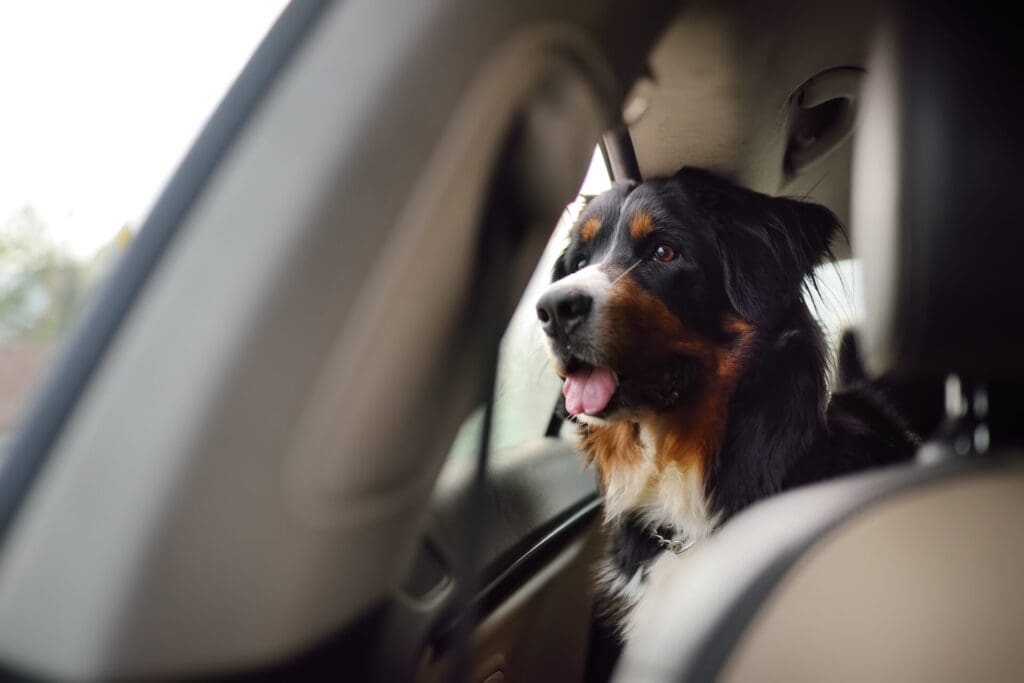
When you travel with dogs in car settings, safety comes before window views and backseat cuddles. A loose dog can distract the driver, move into the front seat, or be injured during sudden braking or a collision. The safest setup depends on your dog’s size, temperament, and comfort level. Smaller dogs may do best in a secure, well-ventilated carrier. Larger dogs can often travel comfortably in a properly fitted vehicle harness attached to a seat belt. A secured crate may also work well for dogs who are crate-trained and relaxed inside. Avoid allowing dogs to ride on your lap or in the front passenger seat. Airbags can cause serious injury to pets, and a dog moving around the vehicle can become a distraction at the exact moment you need to focus on the road.
Here are a few simple car travel with dogs tips to keep in mind:
- Keep your dog restrained whenever the vehicle is moving.
- Never allow your dog to ride in an open truck bed.
- Keep windows safely closed or opened only slightly. A dog with their head out the window may be exposed to debris, insects, or
- sudden distractions.
- Stop regularly for water, bathroom breaks, and a stretch.
- Use a leash before opening the car door, even if your dog is normally well trained.
- Never leave dogs in car unattended, even for a short errand.
Dogs may be excited to join the adventure, but they still need a secure place to settle. The goal when you travel with dogs is not simply getting from point A to point B. It is helping your dog arrive safely, calmly, and ready to enjoy the destination.
Making Road Trips With Cats Feel Less Stressful
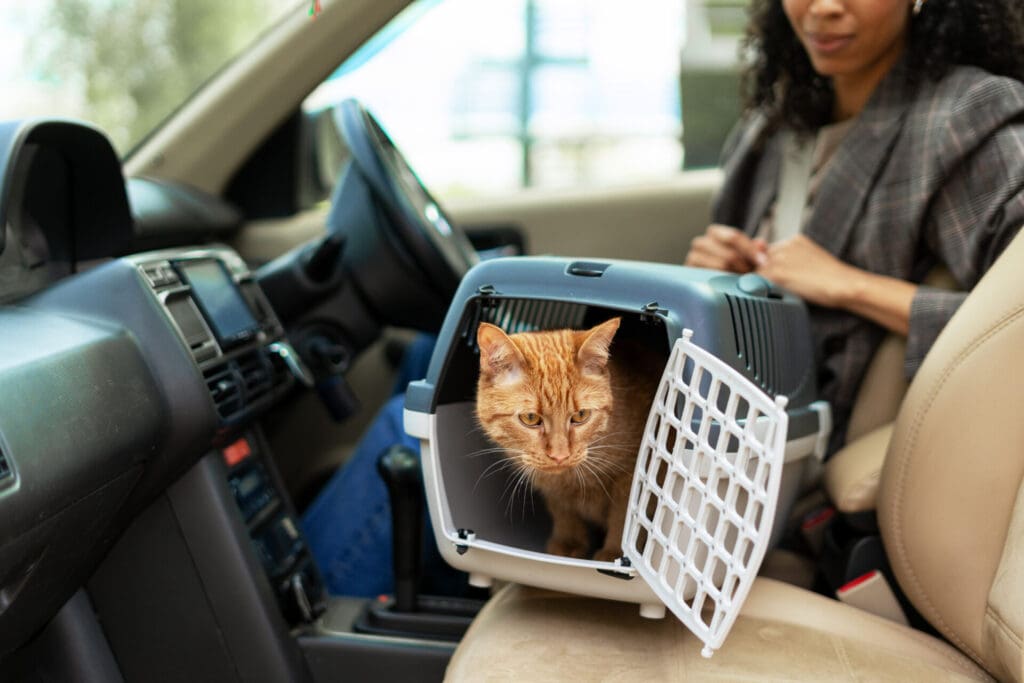
A roadtrip with cats is often less about sightseeing and more about helping them feel secure. Cats tend to feel safest in familiar spaces, which makes a moving vehicle especially challenging. Unlike many dogs, cats should remain in a carrier for the entire drive. A secure carrier protects your cat in car travel while preventing an escape when doors or windows open. Choose a carrier large enough for your cat to stand, turn around, and lie down comfortably. Add a non-slip blanket or familiar towel, but avoid overfilling the carrier with items that could shift around. For longer car travel for cats, consider placing an absorbent pad inside the carrier in case of accidents. Covering part of the carrier with a lightweight blanket may also reduce visual stimulation, though make sure there is still plenty of ventilation.
To make a road trip with cats more manageable:
- Keep the carrier securely positioned so it will not slide or tip.
- Maintain a quiet cabin whenever possible.
- Avoid taking your cat out at roadside stops unless absolutely necessary.
- Use a harness only if your cat is already comfortable wearing one and you are in a fully secure setting.
- Offer water during longer breaks, but do not be alarmed if your cat is not interested right away.
- Bring a portable litter box for overnight stops or long travel days.
Some cats cry, pant, drool, or become visibly distressed while travelling with dogs in car situations or during their own rides. These can be signs of anxiety or motion sickness. Speak with your veterinarian before the trip rather than trying a new calming product or medication on departure day.
What to Pack When Travelling With Dogs and Cats in the Car
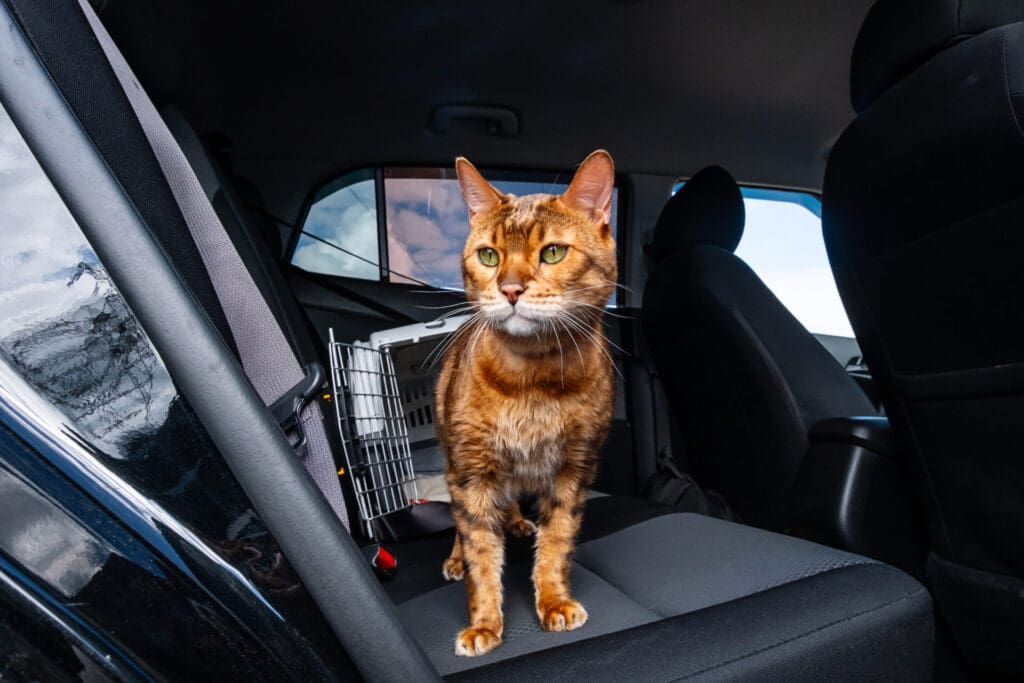
Packing for pets is just as important as packing for people. When you travel with dogs or cats, a few well-chosen supplies can prevent unnecessary stress and make unexpected delays easier to manage.
Your pet travel kit should include:
- Food for the full trip, plus a little extra
- Fresh water and a portable bowl
- Medication, supplements, and clear dosing instructions
- A secure carrier, crate, or car harness
- Leash, collar, harness, and updated ID tags
- Waste bags for dogs
- A portable litter box, litter, and scoop for cats
- Towels, cleaning wipes, and absorbent pads
- A familiar blanket or comfort item
- Recent veterinary records and vaccination information
- A recent photo of your pet in case they become separated from you
Keep the essentials within reach rather than packed deep in the trunk. You do not want to unpack the entire vehicle just to find water, medication, or a leash at a roadside stop. It is also helpful to preserve your pet’s usual routine as much as possible. Feed familiar food, keep walks and rest breaks predictable, and offer quiet downtime after a busy travel day. Consistency can help pets adjust when you travel with dogs or cats in unfamiliar places.
When to Speak With Your Kelowna Veterinarian Before a Road Trip
A pre-trip veterinary visit is especially important for pets with health conditions, puppies and kittens, senior pets, or animals that have struggled with car rides in the past. Your veterinarian can help you determine whether your pet is healthy enough for travel and whether additional planning is needed.
Contact a Kelowna veterinarian before your trip if your pet:
- Has experienced vomiting, excessive drooling, diarrhea, or anxiety during previous car rides
- Takes daily medication or has a chronic condition
- Has heart, breathing, mobility, or neurological concerns
- Is recovering from surgery or illness
- Needs updated vaccinations, parasite prevention, or travel documentation
- Will be crossing a border or travelling internationally
- Is a senior pet, very young pet, or has not travelled before
At Spall and Harvey Animal Hospital, we know that every pet responds to travel differently. Some may need only a few short practice drives before they are ready to go. Others may benefit from a tailored plan to help reduce nausea, anxiety, or discomfort. A little planning can turn a stressful car trip with dog or cat into a safer, more enjoyable part of the adventure. Whether you are heading out for a weekend in the Okanagan or a longer journey beyond Kelowna, prepare early, pack thoughtfully, and give your pet the secure space they need to travel well. Before your next trip, contact our Kelowna veterinary team to help ensure your dog or cat is comfortable, prepared, and ready to travel safely.